Washing a bath mat that smells and slides around
Discover how to clean bathroom mat backings without melting the rubber by using a gentle wash cycle and air drying to keep odors away.
- Jotted down by Gwen Halvorsen
- 6 min fix
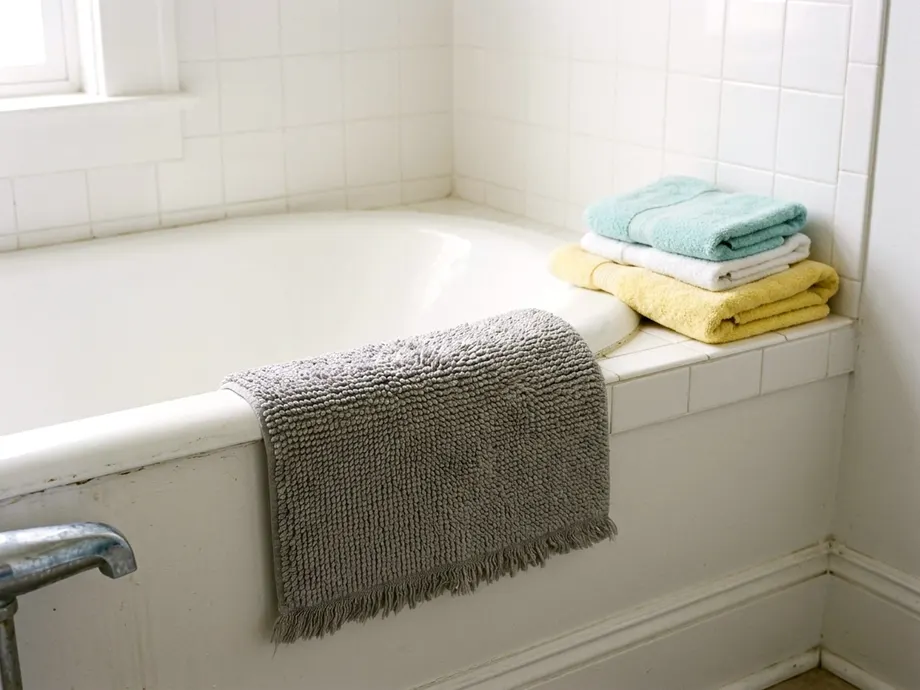
Wash a bath mat on a cold and delicate cycle with mild detergent, and air dry it to protect the soft rubber grip. Solid cotton rugs tolerate warmer water. Proper washing removes bad odors without melting the non-slip backing inside your machine.
Read the care tag before the mat goes near the washer
Check the small label attached to the underside of the rug, because manufacturers print specific water temperatures and drying methods there. Materials react differently to heavy agitation. Solid cotton rugs survive a regular warm wash just fine, while synthetic foam requires gentler treatment.
Ignoring the tag can damage the non-slip coating. Hot water can harm the rubber grip and leave residue in the washing machine drum.
Locate the tag on a corner of the underside. If the tag is faded, default to cold water and a delicate cycle.
Shake it out and pretreat the grime with a little detergent
Bath mats collect loose hair and tracked dirt every day. Vacuuming a small rug can jam the brush roll. Take the rug outside or hold it over the bathtub instead.
Give the mat a vigorous shake. Beating the back dislodges dry particles hidden deep in the thick fibers. A washing machine struggles to drain away thick wet hair and heavy grit.
Loose debris often clogs the drain pump over time. Removing the dry dirt first protects the mechanical parts. It also gives the laundry soap a better chance to clean the actual fabric.
Bathrooms see a lot of spilled lotion and dropped makeup. These oily substances leave dark patches on light fabric. A cold wash cycle struggles to lift heavy grease on its own.
Common spots to check:
- Makeup smudges from dropped foundation or powder
- Greasy patches from spilled body lotion
- Dark dirt marks near the edges from dusty shoes
Pour a few drops of liquid laundry detergent directly onto any dark spots. Rub the soap into the fibers using your bare fingers or a soft brush. Work the detergent into a slight lather, and let the soap sit for a while to break down the oils.
Skip the harsh chemical stain removers. Strong stain removers can harm the backing, so check the care tag. Gentle dish soap works well if you run out of laundry detergent.
Wash rubber backed mats gently with towels to cushion them
Place the mat inside the washer along with a few soft bath towels. A heavy rug thrown in alone throws the machine completely off balance. The heavy drum bangs loudly against the side panels. Towels add soft weight around the drum to keep the spin cycle steady.
Towels also act as a physical buffer. The soft fabric prevents the plastic agitator from scraping the delicate rubber base. Severe friction tears chunks out of older backings. Keep the total load medium to small so everything moves freely, because adding too many towels crowds the drum.
Top loading machines with a tall center agitator can be rougher on a mat. The hard plastic fins grab the heavy rug and twist it violently. Front loading washers tumble the load gently. A delicate cycle slows the agitator down and protects the rubber.
Set the machine to a cold water temperature and choose the gentle or delicate cycle to slow down the spin speed. Pour in a standard dose of mild detergent. Avoid bleach entirely, because bleach can damage rubber backing, so follow the care tag. Running a balanced load stops the washer from stalling midway through.
Treat memory foam mats on the delicate setting and skip high heat
Memory foam acts like a giant kitchen sponge. The dense core absorbs a massive volume of water during the rinse cycle, making the rug extremely heavy. A fast spin cycle stretches and rips the delicate foam structure apart.
Select the lowest possible spin speed on the control panel. The delicate cycle provides just enough movement to rinse the soap away. Check the care tag for the water temperature, since heat can warp foam.
Check the drum after the final cycle finishes. The rug will still hold excess water. Press your hands firmly against the surface to squeeze out the remaining moisture. Do not wring or twist the material, because twisting can tear the foam and ruin its shape.
Wash solid cotton mats on a warmer cycle
Thick cotton mats without a rubber backing handle the wash much better. Plain cotton withstands warmer water without falling apart. Warm water dissolves soap scum faster, and it does a better job of removing body oils.
Balancing the drum prevents soaking wet rugs. Wash two cotton mats together or throw in a few large towels. An unbalanced load leaves heavy cotton soaked at the end of the cycle.
Use your regular laundry detergent. You can add a splash of white vinegar to the rinse if the care tag allows. Vinegar may help with stale odors. Skip liquid fabric softener, because it can coat the fibers and make them less absorbent.
Dry on low or hang the mat so the backing does not crack
Air drying is the safest way to dry mats with a rubber base. High heat in a clothes dryer can dry out and crack rubber, so follow the care tag. Hang the wet rug outside over a railing or a sturdy clothesline.
Drying indoors works just fine if you have good air movement. Drape the mat over a sturdy shower rod. Make sure the fabric side faces outward. Give it plenty of time to dry completely, since a damp mat placed on a hard floor traps moisture against the wood or tile.
Solid cotton rugs offer more freedom. If the care tag allows, toss a plain cotton mat into the dryer on low heat. Check the lint trap halfway through the cycle, because thick terry cloth can shed lint. Take the cotton rug out while it is slightly damp to prevent shrinking.
Why a mat starts to smell and how to stop it
Mildew causes the sour damp smell in a bathroom rug. Fungi thrive in dark and wet environments. Stepping out of the shower transfers plenty of water straight into the thick threads, and the dense material holds onto that moisture for a long time.
A mat lying flat against a tile floor gets no airflow underneath, so the moisture sits trapped between the rubber backing and the room air. Bacteria feed on dead skin cells left behind by wet feet. The combination of stagnant water and bacteria creates a persistent odor. You need to remove the excess moisture to stop the smell.
Pick the mat up off the floor after every shower, and drape it over the edge of the bathtub or the glass shower door. Hanging it up exposes both sides to the room air so the water evaporates much faster. A dry mat starves the bacteria and stops the mildew from growing.
Wash it regularly and let it dry between uses
Bath mats need washing just like your regular bath towels. Toss the rug into the laundry regularly for normal use. Wash it more often if multiple people share the same bathroom. Frequent washing clears away the skin cells and soap scum before they turn sour.
Waiting months between washes lets the dirt grind deep into the base. The rubber backing degrades faster when covered in grime. Set a specific day of the week to gather all the bathroom rugs.
Keep a spare mat folded in the linen closet. Swap the dirty one for the clean one on laundry day. Having a backup means you never have to step onto cold tiles while the primary rug air dries. Let the clean mat dry completely before it goes back into rotation.
Next snags we can fix
The best way to clean a hat without crushing its shape
The best way to clean hats is to wash them by hand in cool water, spot-treat the sweatband, and dry them over a round form to protect the brim.
Laundry Day 6 min fix
Can you dry clean at home, and which labels allow it
Find out how to dry clean at home by reading the label rules and learning the hand washing steps that save money on professional cleaning bills.
Laundry Day 8 min fix
How to wash a load of laundry so it actually comes out clean
Learn the right way to wash laundry by sorting fabrics, setting the correct water temperature and drying clothes so they last longer.
Laundry Day 7 min fix