Why your windows streak and how to get them clear
Find out exactly how to clean windows without leaving streaks behind using warm water, plain dish soap and a squeegee for clear glass.
- Jotted down by Gwen Halvorsen
- 6 min fix
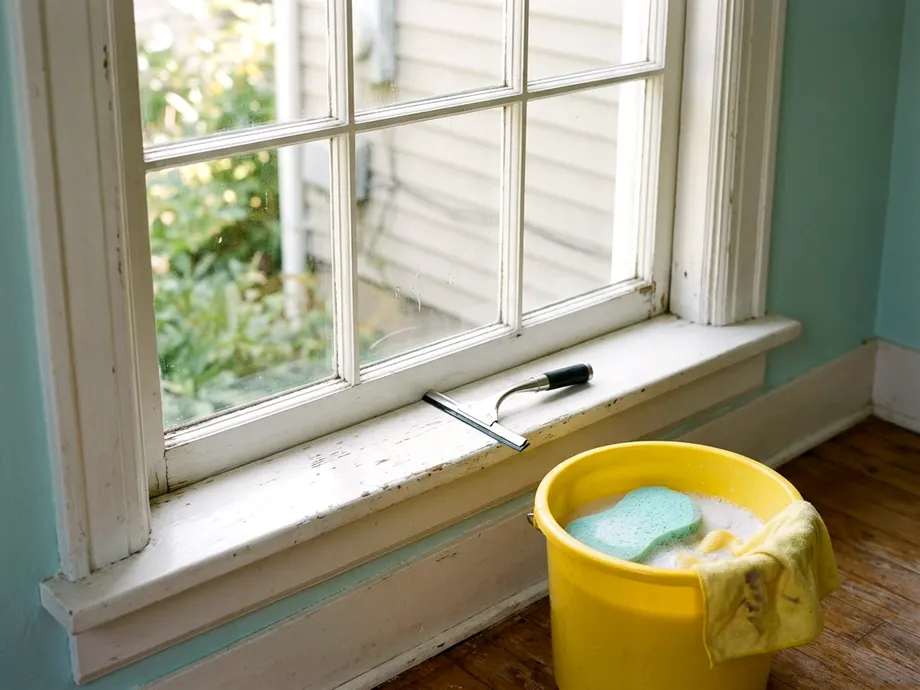
The best way to get streaky windows clear is a simple wash with plain dish soap, warm water and a squeegee. Streaks happen when a liquid cleaner dries too fast or leaves a soapy film on the glass. Pulling a rubber squeegee across the wet pane removes the dirt entirely instead of pushing it around.
Why streaks happen and what leaves them
Commercial glass sprays often dry before you can wipe them off. The liquid evaporates and leaves the dust sitting exactly where it started. Paper towels make the problem worse.
They push the loose dirt across the pane instead of lifting it away. The paper fibers also stay behind and cling to the wet surface.
A soapy film creates another type of stubborn streak. Heavy cleaners leave a cloudy haze on the glass. The residue catches sunlight and ruins the view.
House panes require a different wash method than you use to clear car windows. Living room windows do fine with a milder wash, which is gentler on the painted sills and wood finishes around the frame.
Gather the right tools for a clear finish
A basic wash requires items you probably keep in the kitchen. These basics work perfectly for residential glass.
- A plastic bucket that holds plenty of water.
- Liquid dish soap with no heavy moisturizers or bleach.
- A large clean sponge or a soft scrub brush.
- A wide rubber squeegee with a fresh blade.
- Several dry microfiber cloths for buffing the edges.
- An old bath towel to protect the indoor floors from drips.
A squeegee does the heavy lifting for this job. Buy a model with a replaceable rubber blade. The rubber edge nicks easily against rough frames. A torn blade leaves thick water lines behind on the glass.
Clean in shade, not in direct sun
Direct sunlight heats up the window pane. Hot glass bakes the washing water before your squeegee can clear it away. The water evaporates rapidly. Dried dirty water becomes a fresh layer of streaks.
Wait for a completely overcast day to wash the house. Cloud cover keeps the glass cool. The shade buys you plenty of time to work.
You can also follow the shade around the exterior of the house. Wash the east-facing panes late in the afternoon. Move to the west-facing windows the following morning.
Summer heat makes the job much harder. Spring and fall offer the best mild weather for washing exterior glass. Cool air slows evaporation, so the wash water stays wet longer.
Mix a few drops of dish soap into a bucket of water
Heavy window sprays cost money and leave a chemical film. Plain dish soap cuts through airborne kitchen grease. It lifts dust just as well.
Fill your bucket with warm water. Squeeze a few drops of liquid dish soap into the bucket. You need just enough soap to make the water slippery.
Too much dish soap creates a bucket full of thick suds. Suds dry out quickly and leave a cloudy mess on the pane. Swirl the warm water gently with your hand to mix the soap.
The soapy mixture coats the dirt so the squeegee glides over the surface. Change the bucket water once it turns dark brown. Dirty water transfers mud back onto the next window.
Wash the glass and wipe the frame and sill first
Dirt hides on the frame and the bottom sill. Washing the glass first lets mud from the frame drip down onto clean glass. Start with a dry vacuum to suck up dead bugs and loose dirt.
Push the crevice tool deep into the bottom track. You can clear the sill much faster after cleaning dusty window blinds overhead.
Dip a clean sponge into the soapy wash water. Scrub the top frame and the side tracks vigorously. Wipe down the lower sill and the metal locking hardware.
Use a damp rag to clear away any loose grime on the edges. The frame is now ready for the actual glass wash.
Indoor glass gathers sticky fingerprints and cooking grease. Lay a thick bath towel on the floor below the window. The fabric catches stray drips. The towel protects your hardwood floors.
Dip your sponge into the bucket and squeeze out the excess water. The sponge should remain fully damp rather than dripping wet. Rub the entire pane with the wet sponge. Scrub gently to loosen thick dust and old tape residue.
Keep the glass completely wet during this process. Dry patches of glass will catch the rubber blade and cause it to skip. A skipping blade leaves a jagged streak of water across the center.
Pull a squeegee in one pass and wipe the blade each stroke
A squeegee lifts the dirty water off the surface in a single motion. Place the rubber blade at the top left corner of the wet glass. Pull the tool straight down to the bottom sill.
Keep a dry rag in your free hand. Wipe the rubber blade completely dry. A wet blade leaves drops of water on the next stroke.
Move the squeegee back up to the top of the window. Place the blade so it slightly overlaps the clean dry line you just made. Pull straight down again and wipe the blade dry at the bottom.
Repeat this vertical motion across the entire glass. The dirty water pushes down onto the sill instead of staying on the pane. Wipe the sill dry with a separate towel.
Manage divided panes and small glass squares
Small glass squares on French doors require a different strategy. A wide squeegee hits the wooden dividers and misses the glass entirely. Buy a narrow squeegee made specifically for divided light windows.
Wash the small panes with a smaller sponge to avoid soaking the wood. Pull the narrow squeegee straight down each individual square. Wipe the blade dry after every single pull.
You can also skip the squeegee entirely for tiny accent windows. Wash the small square with soapy water. Buff the entire mini pane dry with a clean microfiber cloth. Turn the cloth to a dry side frequently to avoid smearing the dirt.
Buff leftover streaks with a dry lint free cloth
Water often pools at the edges where the squeegee meets the wood frame. This leftover water creates a dirty border when it eventually dries.
Grab a clean microfiber cloth to fix the edges. Run the dry cloth around the entire perimeter of the glass. Press lightly to absorb the excess moisture.
Microfiber grabs the water without leaving tiny paper fibers behind. You can also use a clean cloth baby diaper or a lint-free shop towel.
Check the center of the window for any stray water drops. Buff those specific spots out gently with the dry cloth.
Wash these towels later with regular laundry detergent. Avoid fabric softeners because they can leave a residue on your cleaning rags.
Fix the stubborn spots that wash will not lift
Standard soapy water ignores tree sap and hardened paint splashes. Hard water spots also survive a basic wash. You need a different approach. Wet the glass again with the soapy sponge.
Scrape the wet sap or paint gently with a fresh razor scraper held flat against the glass, and check the glass maker's instructions first. The soapy water acts as a lubricant for the sharp edge. Wipe the loose debris away with your rag.
White vinegar often loosens chalky mineral spots left by lawn sprinklers. Spray straight white vinegar directly onto the cloudy patches. Let the acid sit on the glass for a few minutes. Wash the pane normally with soap and water after the spots dissolve.
Exterior panes gather their own stubborn marks like baked-on bird droppings and thick mud. Take the window screens out before you begin. Wash the screens separately with a garden hose and a soft brush. Prop them against a fence to dry in the breeze.
Hose down the exterior glass to remove the heaviest dirt. Apply the soapy water with a large sponge. Scrub the glass thoroughly to loosen baked-on pollen.
Pull the squeegee down the glass exactly like you did inside. Outside glass that sat dirty for months may need a second wash.
Next snags we can fix
Cleaning blinds when the dust has turned into sticky grime
Figure out how to clean blinds of every material from simple loose dust to sticky kitchen grime using basic household supplies and a few easy steps.
Cleaning Shortcuts 8 min fix
How to remove bathroom mold and keep it from coming back
Learn effective bathroom mold removal to scrub away stubborn dark spots and fix the hidden moisture issues that keep bringing the problem back.
Cleaning Shortcuts 7 min fix
Getting sweat, pee and old stains out of a mattress
Figure out how to clean mattress foam and fabric right now, from fresh accidents to old yellow sweat rings, using mild cleaners and basic baking soda.
Cleaning Shortcuts 6 min fix